
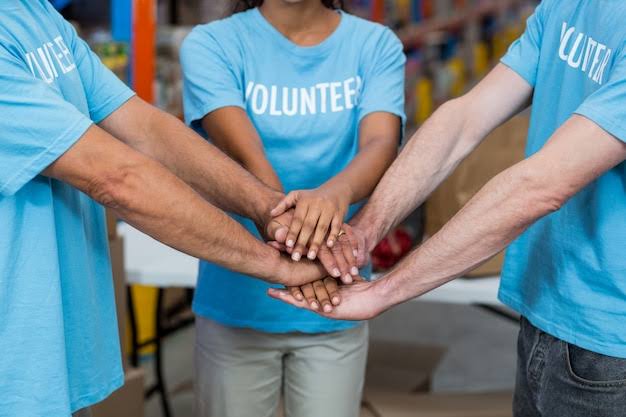
In a world often divided by politics, economics, and ideology, there are moments that remind us of a deeper truth: humanity, at its core, longs to connect, to help, and to heal. These moments of global solidarity—when borders blur and compassion leads—reveal the best of who we are. In times of crisis, tragedy, or need, countless stories emerge of people reaching across lines of difference to offer a hand, a home, or hope. These are the stories that don’t always make the headlines, but they make history in the hearts they touch.
Take, for example, the story of Lesvos Solidarity, a community-led initiative in Greece. At the height of the refugee crisis in 2015, thousands of displaced Syrians, Afghans, and Iraqis were arriving daily on the shores of the island of Lesvos. With limited government support and exhausted local infrastructure, it was ordinary Greek citizens—fishermen, teachers, grandmothers—who stepped in. They opened their homes, cooked meals, distributed clothes, and organized shelters. What began as spontaneous kindness blossomed into a full-scale NGO, built on compassion, volunteerism, and a belief that no one should be left behind.
In Lebanon, where tensions from regional conflicts often run high, FoodBlessed emerged as a grassroots movement tackling hunger. During the COVID-19 pandemic, the country faced an economic collapse that plunged many into poverty. Volunteers from diverse religious, political, and social backgrounds came together, setting aside differences to distribute food packages and warm meals. In a country with a long history of division, the act of feeding a hungry stranger became a quiet but powerful act of unity.
Solidarity is not always dramatic—it can be subtle, persistent, and deeply personal. In Malawi, a small nonprofit called Determined to Develop supports vulnerable youth through education and empowerment. But when flooding displaced dozens of families in 2019, it wasn’t the NGO alone that rose to the challenge. The community they had served rallied—former students offered their homes, local women cooked for the displaced, and teenagers volunteered to clean and rebuild damaged houses. It was a full-circle moment: those who once received support became the supporters.
Sometimes, solidarity spans continents. During the 2022 floods in Pakistan, donations and support poured in not just from neighboring countries, but from Syrian refugees in Europe who remembered what it meant to be in need. A group of refugee women in Germany, many of whom had lost everything during their own crisis, sewed and sold hand-embroidered scarves, raising funds for Pakistani families. “We may have nothing, but we understand suffering. This is our way to give back,” said one woman. It was a testament to the fact that compassion grows even in the harshest soil.
In the heart of Africa’s Sahel region, where drought and conflict threaten daily survival, solidarity often takes the form of cooperation among villages. One such initiative, led by Amref Health Africa, trained local health workers not just to serve their own communities but also neighboring ones, regardless of tribal or ethnic lines. In a region historically marred by intergroup tensions, this model of shared healthcare created trust and interdependence—saving lives and softening divides.
Even in high-tech settings, global solidarity shines. In 2021, during India’s deadly second wave of COVID-19, tech workers from Silicon Valley formed the India Covid SOS coalition. Within weeks, they coordinated oxygen shipments, hospital supplies, and telehealth support from across the globe. What made it powerful wasn’t just the scale—it was the volunteers’ personal ties to the crisis. Many were first- or second-generation immigrants who felt a deep call to act for their homeland. They became a digital lifeline when physical help couldn’t arrive fast enough.
Solidarity often begins with a simple gesture. In Denmark, a Syrian refugee named Ahmed fled war, crossed seas, and eventually found safety in Copenhagen. Years later, he now leads language classes for new arrivals and helps them navigate life in a foreign land. “I was welcomed here,” he says, “and now it’s my turn to welcome others.” His story echoes the idea that humanity wins not through grand acts, but through everyday kindness multiplied over time.
What unites all these stories is a shared recognition of common humanity. It’s not about being a savior or a victim—it’s about being human together. Whether it’s disaster relief, refugee aid, pandemic response, or simple neighborly kindness, global solidarity isn’t just a reaction to crisis—it’s a statement of identity. It says, “We belong to each other.”
In a time when global headlines can feel overwhelmingly bleak, stories like these serve as counterweights. They remind us that hope is not naïve—it is necessary. That unity is not impossible—it is already happening, every day, in corners of the world we rarely see.
When humanity wins, it’s not because the powerful stepped in—it’s because ordinary people chose to stand together. They chose love over fear, inclusion over isolation, and action over apathy.
And in doing so, they remind us all of what is possible—not just in moments of disaster, but in every day that follows.

